

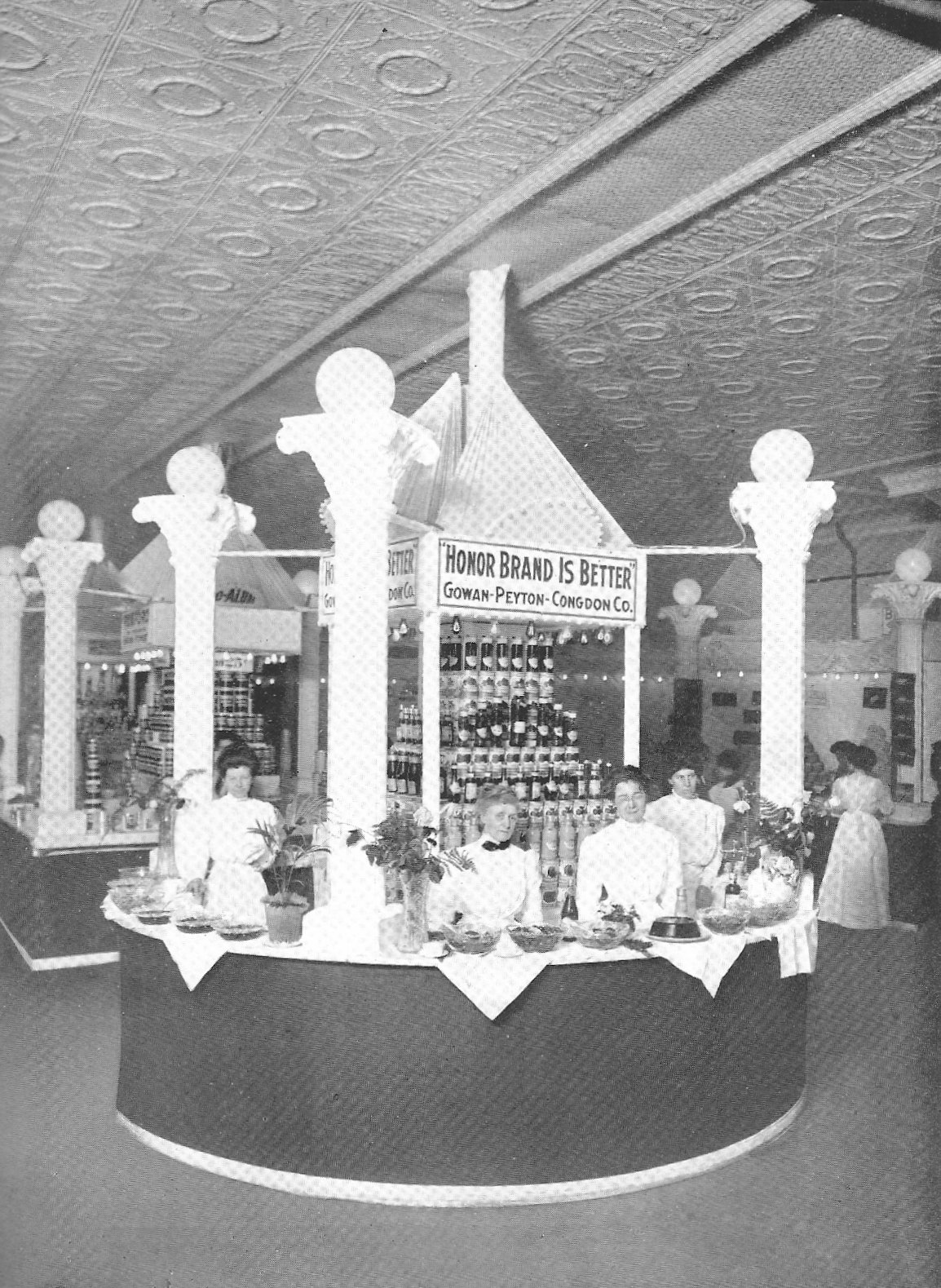
This photo from 1910 depicts “Mrs. Goldsmith and associates ready to demonstrate Honor Brand pure food products at the Pure Food Show, Duluth.” That tells us quite a bit, but here’s the question(s): Where was the Pure Food Show held? What is the location of this photo? Is it an existing building or long-demolished one? Does anyone recognize that ceiling?
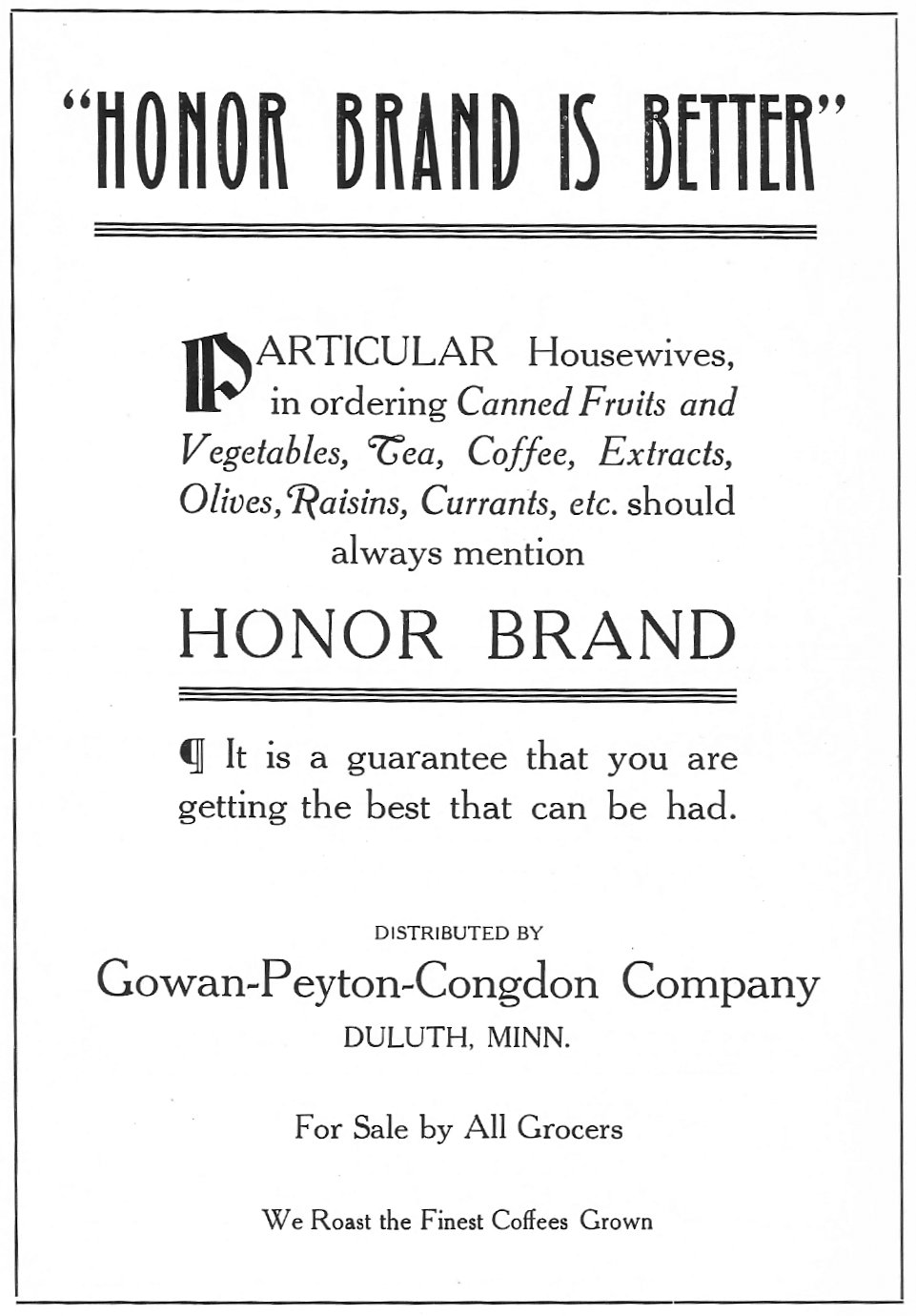
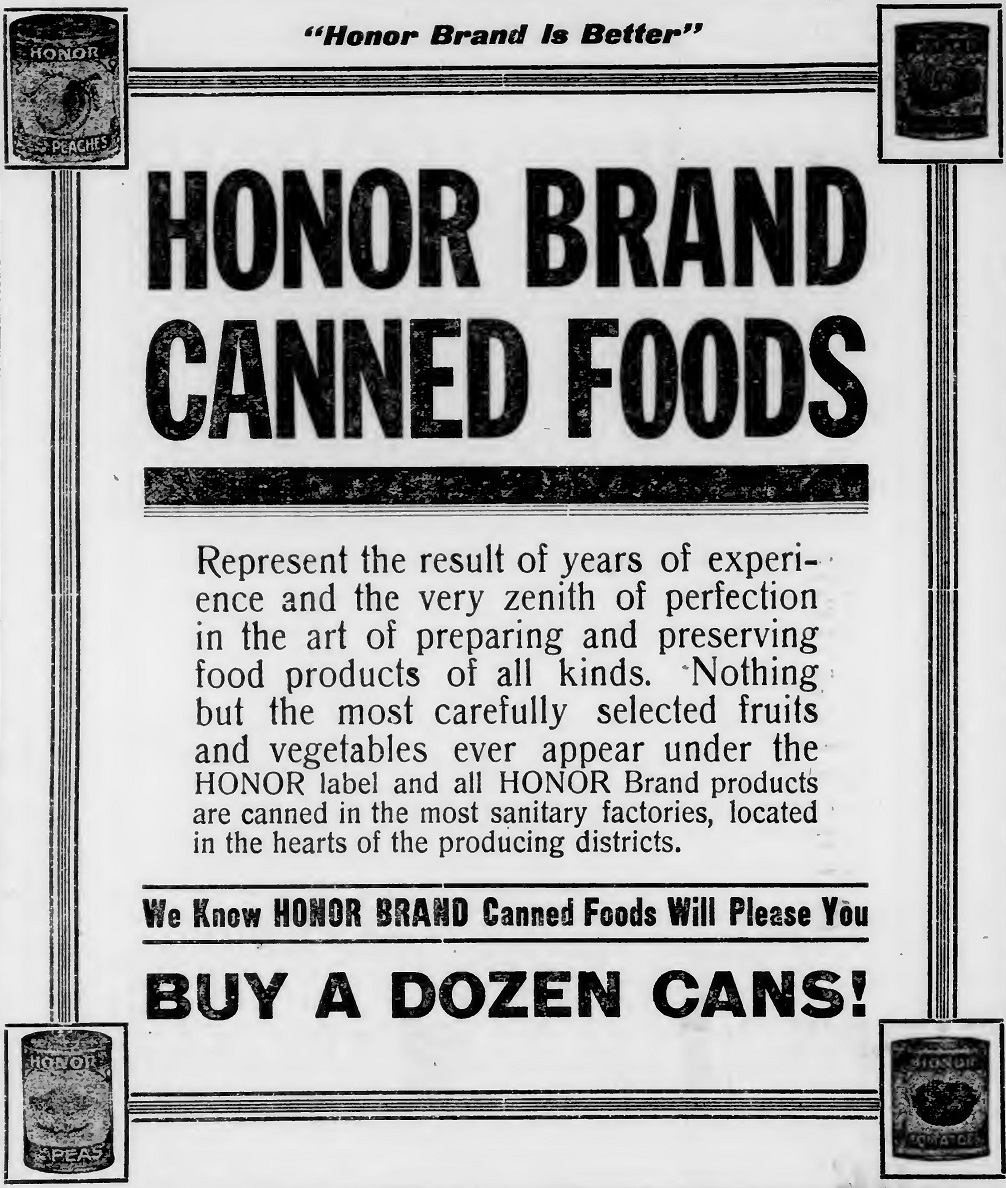
Below are two Honor Brand ads repeating the same brilliant slogan, “Honor Brand is better.”
And below is a crop of an image from the Northeast Minnesota Historical Center Collections of a laker entering the Duluth Harbor through the Aerial Lift Bridge. “Honor Brand” can be scene on the side of the Gowan-Lenning-Brown building, which these days is known as the Paulucci Building, 525 S. Lake Ave. Gowan-Lenning-Brown was a wholesale grocery firm that must have carried Honor Brand products. The photo was shot by Louis P. Gallagher.
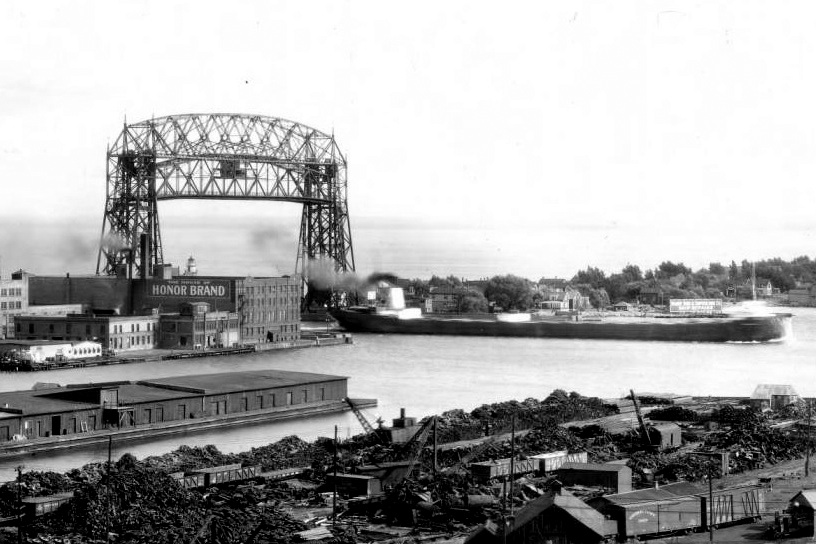
Caption: “In the middle of this image are the low, long Northern Pacific freight sheds with cranes and a couple of men near the harbor end of the dock by the tip of the ore boat. Wholesale grocers Gowan-Lenning-Brown sign for its Honor Brand is visible in the Canal Park area near the bridge. The manufacturer of the Honor Brand was an outgrowth of the Wright-Clarkson Company. It was Gowan-Peyton-Twohy Company in 1910 then Gowan-Peyton-Congdon in 1911, and finally Gowan-Lenning-Brown in 1913.”
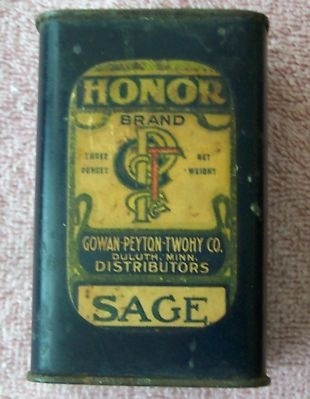
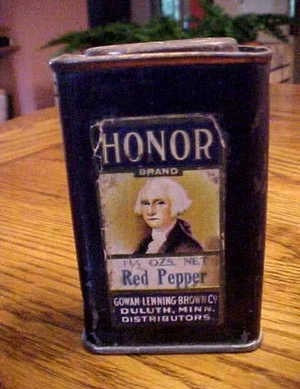
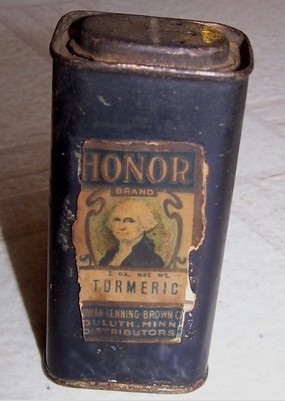
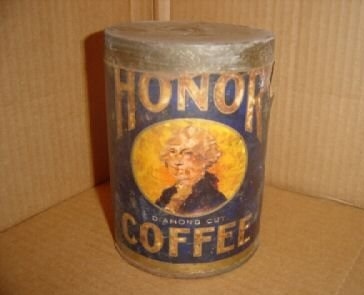
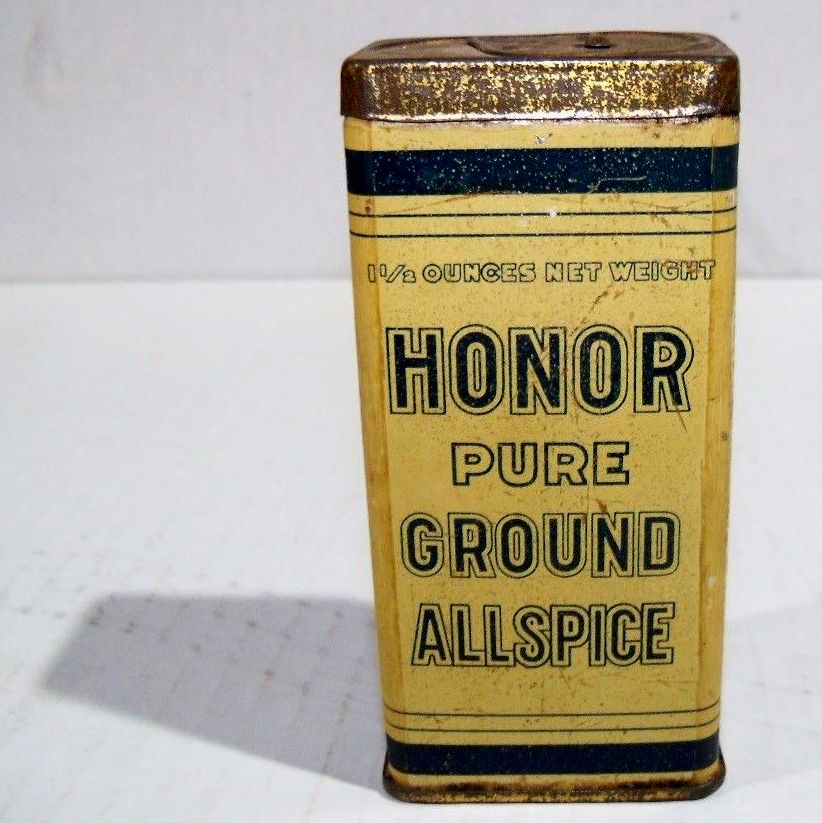
And below are a few Honor Brand products, from various photos by people on the Internet seeking to sell antique tins.
12 thoughts on “Duluth Mystery Photo #15: Honor Brand”
The 1910 Pure Food Show (there were various ones held over the years, sponsored by the local Grocers’ Association) was held at 222 and 224 West First Street. There were 40 booths, with a basic color scheme of blue and white with pillars separating the booths.
These shows appear to have been held for ten days. (That year there was another one in Superior.) This one was held from about Dec. 1-10.
The DNT reported that up to nearly 3,000 people attended nightly. (Basically, it was a great place to get free food and samples to take home.)
HBH has the location correct. The proofs are piling up in my inbox. Here are a few clippings:
Nov. 29, 1910 | Duluth News Tribune
Dec. 2, 1910 | Duluth News Tribune
Dec. 11, 1910 | Duluth News Tribune
Dec. 7, 1910 | Duluth Herald
The text on the last one can’t be read off the image, so here it is:
So, the question becomes, what is at 222 and 224 W. First St. today?
Answer according to Google Maps: Keep Health Foot Massage and Twin Ports Mailing.
Was this building there in 1910? If so, does it still have the fancy ceiling? The mystery continues …
According to property details on the St. Louis County website, the current building at 222 W. First St. was built in 1946.
So the building that hosted the Pure Food Show is no more. The remaining mystery: What happened to the old building at 222-224 and what was its deal?
I like that macaroni is described as “flour sticks cooked perfectly and covered with tomato dressing.”
It was called Duluth Music Company and was known as one of the largest piano showrooms in the Midwest. With all that room, they rented space for events and storage. By the 1920s, it had become a shoe store.
I am impressed with the bravery of the intrepid reporter who tasted the “delicious canned spinach and beets.”
Don’t worry. A drink of Horsford’s acid phosphate will relieve any distressed feeling which might follow.
What’s interesting to me is that this is called the Pure Food Show, but is clearly the beginning of the marketing of food-like products rather than food. (Like Jello and Mapleine, for instance.) Instead of canning your own food, you were supposed to buy canned food from the stores. This is grocery marketing at its finest. And obviously it succeeded in transforming our culture.
Tony Dierckins of Zenith City Online provided this postcard image of the Gowan-Lenning-Brown building circa 1915.
Tony provides this additional insight: “The building at far right (now Rustic Olive) was built in 1909 as the Buckeye Building for National biscuit, but in 1915 architect Frederick German worked it into his Gowan-Lenning-Brown building by tying them together with the low addition in between.”
… and Gowan-Lenning-Brown sold Honor Brand products, which is why the terra-cotta profiles of George Washington are on the building to this day.