

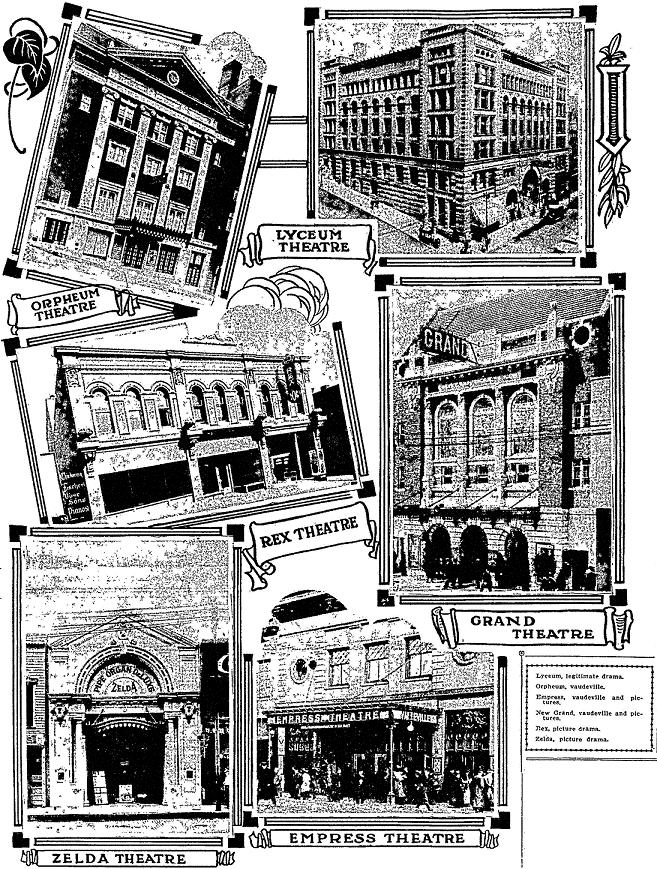
That was the headline above this photo collage from the Sept. 30, 1914 edition of the Duluth News Tribune. Of course, the Lyceum, Rex, Grand, Zelda and Empress are all gone now. Only the Orpheum remains — remodeled and renamed the NorShor Theatre in 1941.
The Duluth Economic Development Authority is working with Westlake Reed Leskosky and SJA Architects on restoration plans for the NorShor. Have patience; it’ll take some time.
5 thoughts on “Amusement seekers are well cared for by theatrical houses of the Zenith City”
WDSE PBS will be airing a new, locally produced documentary, Stage to Screen: Historic Theaters of the North, on Thursday, August 11.
Many fond memories of the Lyceum, especially “monster” movies on a Saturday afternoon!
Seems like theater is hot again in Duluth!
Here’s the news release on Stage to Screen: Historic Theaters of the North:
And here’s some photos from the documentary:
Grand Opera House
Grand Opera House interior
Grand Theatre
Lyceum Theatre
Lyceum Theatre interior
I grew up in Duluth, graduated in 1965 from UMD and moved East to go to graduate school at the Yale School of Drama. I have lived in CT ever since.
I was always fascinated by the theaters in Duluth. At UMD I started a company called the Arrowhead Theatre Guild and we reopened the Lyceum to live performances of four musicals, bringing in leading actors from NYC that I had met in summer stock.
I remember seeing movies at the Granada, Lyceum, Lyric, Garrick, Lakeside, and the Star in the West End.
I have just purchased some incredible photos of the Garrick for a project I am working on of a vaudeville act that played throughout the country, including Duluth at the Garrick. The star of the act, Dainty June, became the actress June Havoc who died last year at her home in CT at the age of 97.
I just discovered this site and am so impressed.